












How Emily Dick Built Unbuttoned Brands, a Values-Driven Branding Studio for Founders Who Refuse to Play It Safe
May 27, 2026

Written by
There are brand designers who treat strategy and design as separate disciplines. Emily Dick treats them as one. The premise of her business is that what a brand looks like should not be separable from what it is here to do.
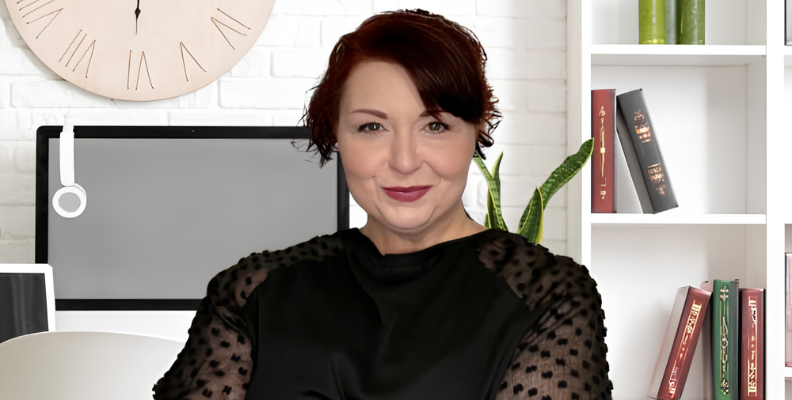
Emily Dick is the founder of Unbuttoned Brands, a brand strategy and design studio for values-driven entrepreneurs. She is also an author whose first book began with a literary agent telling her she had to build an online platform if she ever wanted to publish.
"I believe that the most successful brands should look as good as the impact they're here to make. It's why I love helping values-driven businesses build bold brands that feel unmistakably like them, because being yourself the strategy."
That sentence is the thesis of Unbuttoned. Every other choice in the business is downstream of it.
The Background Nobody Predicted Would Lead Here
Emily did not go to school for marketing or design.
"I went to school for sociology and gender studies," she says. "I never imagined that learning about people and power would lead me to brand strategy and design, but looking back it makes so much sense."
What sociology gave her is exactly what brand strategy needs. The ability to see patterns of identity, the ability to hold a conversation about who someone is without flattening them, and the discipline to ask why a system looks the way it looks before trying to change it.
She started her career as a coordinator at a mandated workplace counselling company, then moved into the family business in restaurant operations and marketing. That gave her the operator's view of how a brand actually moves a small business. Writing and creative freelance work happened alongside, until she eventually left the steady job to pursue entrepreneurship full-time.
The First Brand She Ever Built Was Her Own
The Unbuttoned story has an unusual origin point.
"I built my first online platform because a literary agent told me I had to if I ever wanted to publish my book," Emily says. "I had one option, to figure it out. I built my first personal brand and landed a traditional book deal and grew a following of thousands."
That experience taught her something most clients never learn the hard way. A personal brand is not a vanity project. It is the infrastructure that lets a small operation get noticed by a much larger world.
"I tried several different entrepreneurial paths before realizing that I didn't just love launching new businesses, I was obsessed with building brands."
Unbuttoned was the version of the business where the obsession finally had a permanent home.
Why Emily Did Not Plan to Be an Entrepreneur
The path was not predictable.
"I didn't always know I wanted to be an entrepreneur," she says, "but I've always had a lot of big ideas and knew I wanted to help make the world a better place."
She grew up in an entrepreneurial and philanthropic family, so big dreamy ideas felt normal. The choice was less between employment and entrepreneurship and more between which expression of her values would actually move the needle on what she cared about.
"From a young age, I experimented with small business ideas and helped my family with marketing and other side businesses," she says. "When I decided to write my first book, just out of university, I finally started to feel like I could make a career out of my passions."
It took a lot of experimenting to figure out exactly what she wanted to do. She opened a photography studio and several freelance creative businesses before she left the steady, reliable job for full-time entrepreneurship.
The Customer at the Center of the Studio
Unbuttoned has a specific client.
"I help sensitive, high-achieving entrepreneurs build brands that feel like a natural extension of who they are," Emily says, "because when values-driven entrepreneurs make money, they make the world a better place."
The clients are mostly women or gender expansive people who are done playing it safe and are ready to create a brand that stands out and feels like a natural extension of who they are.
The Marketing Pivot Most Founders Are Too Scared to Make
When Emily first launched Unbuttoned, social media was her primary marketing channel. Or at least, it was where she spent most of her time.
"I also focused on building my online presence and experimenting with different strategies, things like ads and paid lead generation," she says. "What I eventually realized was that most of my clients were not coming from social media."
About a year ago, she made a decision few brand designers would willingly make.
"I decided to put up a static nine post grid on Instagram to focus on other marketing strategies that have been more effective for me, including email marketing and SEO," she says. "Not only did this reduce burnout, but my business really started to grow because I was focused on things that were actually working."
"Marketing is about constantly experimenting and tending," she says, "but I learned that it shouldn't feel unsustainable."
The Work That Stays With Her
When asked what she is most proud of, Emily does not name a client win or a viral post.
"I am most proud of what my business stands for," she says. "Getting to work with people who help people feels like the best way to make an impact. Helping values-driven entrepreneurs stand out and get chosen means more money in the hands of people who will invest in their families, communities, and causes they care about."
That framing makes Unbuttoned more than a design studio. Every brand she builds is a small bet on a values-driven founder having the resources to keep doing their work.
How Emily Works With Her Brain, Not Against It
Emily is an AuDHDer, autistic and ADHD, and she has built her schedule around that reality.
"I have become very aware of the ebbs and flows of my energy. It's not always consistent but I have found patterns that work for me," she says. "I tend to book client meetings on days where I am doing more extroverted tasks, like the days I go to Pilates. I do have to be mindful not to overbook meetings on these days to ensure I don't burnout. On days where I need to do creative or administrative work, I make sure that I have nothing else on the calendar so I can get into a rhythm that works for those tasks."
She recently created a separate calendar she can toggle on and off for her menstrual cycle, since that plays a major role in her energy capabilities.
"This has helped me book things at the right time."
The Tool That Pays for Itself
For email marketing, Emily relies on Kit, formerly known as Convertkit.
"It's been such a reliable tool that has grown with my business," she says. "Having the ability to set up automations like welcome sequences and my brand quiz results is irreplaceable. It's a great way to keep in touch with my community and keep my brand top of mind. It's not just a sales tool, it's a vehicle for being able to connect and help empower and inspire others. I love how easy it is to use and it continues to get better."
The App That Carries Her Day
Her favorite app is Google Tasks.
"I love organizing all of my to do list items by priority," she says. "I have a list for High Priority tasks, Revenue and Reputation. Medium Priority, Brand Visibility and Authority Building. And Lower Priority, Admin and Business Development."
When she is feeling overwhelmed, she does a brain dump.
"I brain dump all of the things that are on my mind into these categories. I also have a list for personal and writing ideas."
Being a Mamaprenista Without Apologizing
Emily has two children. Entrepreneurship is what makes mothering them the way she wants to.
"Entrepreneurship has allowed me to be the kind of mom I need to be for them," she says. "Having the flexibility of making my own schedule has been especially important. I try to only work during school hours, or quiet time at home, because trying to work when they need attention makes the process so much more difficult."
Hiring by Gut and By Process
When Emily brings on outside help, the screening looks different from a traditional interview.
"While I mostly work by myself, I do hire outside services to help me with things like Pinterest management, SEO, and copywriting," she says. "I am not necessarily asking any interview questions, because I'm the type of person who goes with my gut. I learn about them from their online presence, another reason personal branding is so important, and then if I have any questions, it's typically about their process. I want to make sure their process works with how I like to work."
That filter is consistent with the studio's positioning. If Unbuttoned is built around being yourself as a strategy, then the team Emily brings around her has to pass the same test.
What Emily Wishes She'd Known
The reflection she offers earlier-stage founders is honest about the entrepreneurial learning curve.
"I didn't realize how much unlearning you end up doing as an entrepreneur," she says. "So I wish I had known that figuring out what doesn't work is just as important as finding out what does work. When you are new to entrepreneurship, you absorb everyone's methods. Being a successful entrepreneur is partly learning what works for you. Your life, your energy levels, your neurotype."
That last word is the tell. The frameworks marketed to entrepreneurs are usually written for one default brain. Emily is naming the fact that the work also includes filtering out methods that were never going to work for the way she is wired.
The Advice She Hands Newer Founders
The advice is unfussy.
"Just start. Too often we delay trying something new because we are afraid of failure," Emily says. "Entrepreneurship is never about getting it right the first time. Things are always changing, just like we are. Entrepreneurship is such a great tool for personal development."
For a brand designer who has spent the last several years helping clients find the version of themselves they have been afraid to put on the page, that reframe lands with weight.
What's Next for Unbuttoned Brands
Emily is continuing to invest in building her online presence in the ways that actually move the needle for the studio. Backlinks, SEO, and email marketing are her growth channels. She is also continuing the writing thread that brought her into entrepreneurship in the first place.
The shape of the next chapter is the same as the current one, just bigger. More values-driven entrepreneurs, more bold brands that feel unmistakably like the founders behind them, and more proof that being yourself is the strategy.
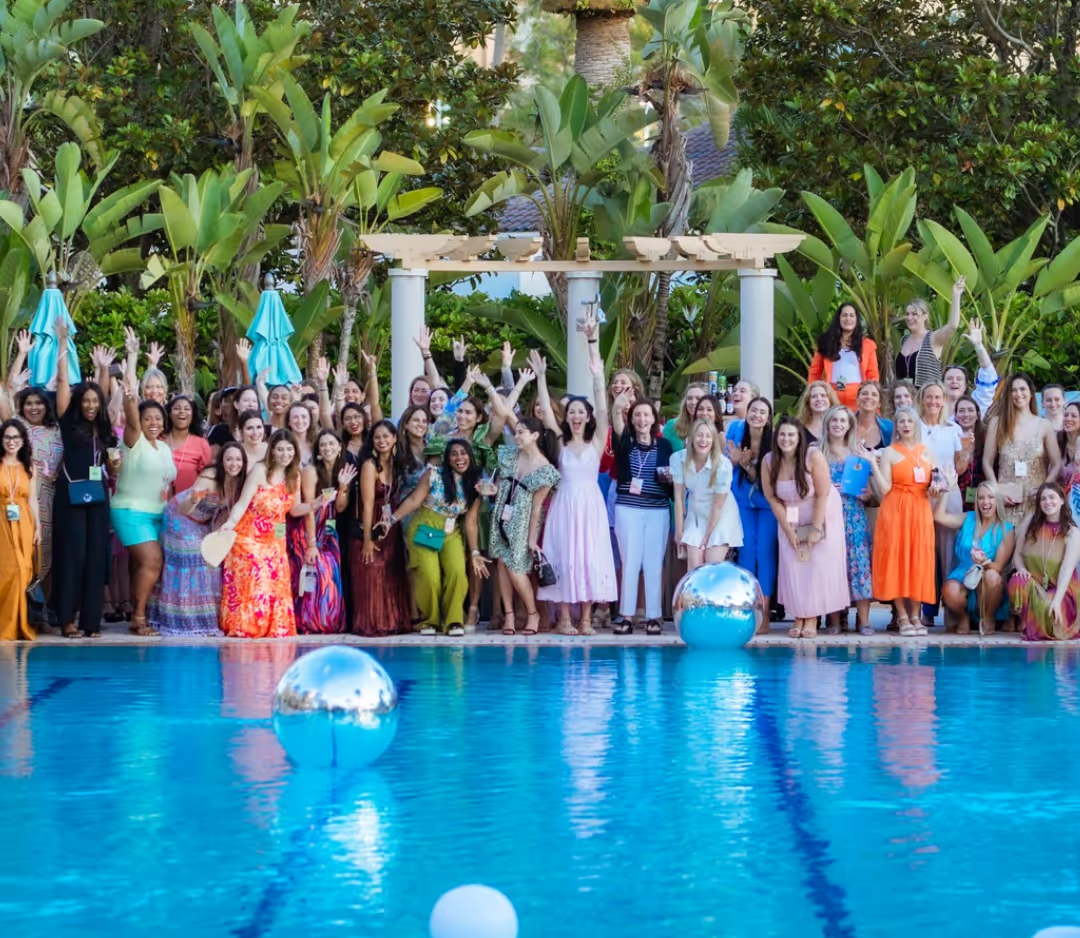
If Emily's approach to building a studio that puts identity and impact at the center of brand design resonates, the Entreprenista League is a community of women founders who value connection, shared experience, and practical business insight as they grow.
About the Author
Entreprenista League

The Latest

Heather Lillico Helps Burnt-Out Founders Rewire Their Nervous Systems
The former nutritionist burnt out building her nutrition business, and the tools that brought her back to calm now anchor her coaching for women founders.
Elizabeth Watson Helps Founders Recover Their Lost Energy

Automate Your Site with a 1-Month Free Trial
Kartra