














How to Never Send a Cold DM Again on LinkedIn
Build a system that brings warm leads to you, so outreach feels like a natural next step.
June 26, 2026

Written by
Natasha Walstra
NearPoint Strategies
When it comes to LinkedIn outreach, there are two kinds of advice floating around.
The first tells you to send sequences, pitch in the DMs, and follow up until someone says no. It feels gross because it kind of is. And in a trust recession, where people are more skeptical than ever, it's nearly impossible to get anyone's attention that way.
The second tells you to post a bunch of content, become a creator, and wait for inbound to come to you. But you can't control the algorithm, and posting and praying is not a strategy.
My approach includes both outreach and content, just done differently.
I haven't sent a cold message since my first sales job, when they made me do it and I didn't know any better. What I do instead is build a system that creates signals of intent and then act on those signals. The difference in response rates is staggering.
What a warm signal looks like.
Recently, I reached out to someone in a local startup group here in Charleston. A simple message, no pitch. They responded: "I'm interested in your services." That's the system working the way it's supposed to.
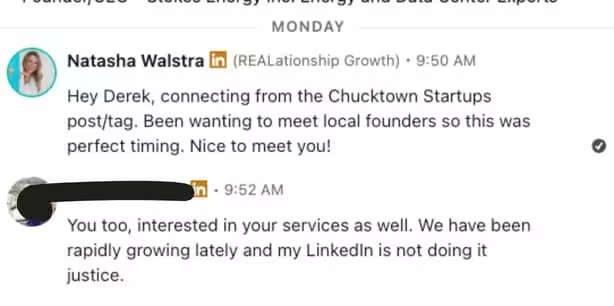
There was already trust established because we were in the same community. They'd likely seen my name around. I didn't have to pitch. They asked.
That's the goal. And this happens all the time.
There are three pieces that make it work:
- Your profile is your hub. Before you send a single message, it needs to clearly communicate what you do, who you help, and how to work with you. When someone receives your outreach and looks you up, and they will, your profile either builds trust or kills it.
- Your content builds trust before you ever reach out. Is it building trust through social proof and expertise? Are you showing up consistently enough that your name starts to feel familiar? When someone has been watching your content for weeks and you reach out, you're not a stranger anymore.
- Your engagement surfaces who's already interested. Calls to action, calls to engage, questions that start conversations. These surface the people who are quietly paying attention but haven't raised their hand yet.
So, when you do initiate a conversation, it doesn't feel like you're running someone through a sequence. It feels like a conversation that was supposed to happen. Because it was.
Is it more involved than sending 100 automated generic DMs a day? Sure. But when the system is working, outreach stops feeling like sales and starts feeling like continuing a relationship that already exists.
A few weeks ago, someone bought my REALationship Signal Map, a resource for finding the people who are quietly signaling interest on LinkedIn. She reached out right away and said: "These are great resources but it got me confused. It goes in a completely different direction from what I got from a LinkedIn Specialist that I hired. I prefer your way much better as I feel really uncomfortable doing it."
.avif)
That discomfort she described? That's the pitch-slap approach that gives the ick. You never have to feel that way again.
Where to start
Look at your profile first. Ask yourself honestly: if someone received a message from you today and went to look you up, would they immediately understand what you do and feel compelled to respond? If the answer is anything but yes, start there.
Then look at your content and engagement. When both of those are working, your outreach becomes the easiest part.
P.S. If you want a starting point for finding the warm signals already waiting for you on LinkedIn, the REALationship Signal Map walks you through the most common ones and exactly how to act on them!
About the Author
Natasha Walstra
NearPoint Strategies
Natasha Walstra is the founder of NearPoint Strategies and creator of the REALationship Growth Method™, where she helps entrepreneurs and executives build visibility on LinkedIn and turn authentic connections into revenue. She teaches personal branding and relationship-driven social selling that positions clients as thought leaders - without resorting to pitch slaps or transactional outreach. Drawing from her experience at companies like Carbon and Forbes Books, Natasha developed an approach that proves genuine connection consistently outperforms aggressive tactics. Her methodology centers on showing up with purpose, establishing expertise through authentic content, and creating relationships that actually convert.
Natasha built her business while navigating first-time motherhood as the primary breadwinner, proving that sustainable growth doesn't require sacrificing your values or your time. She now helps hundreds of clients master LinkedIn by making it feel human again - treating the platform as an extension of their workplace where real relationships drive real revenue. When she's not coaching clients or creating content, Natasha is chasing her toddler through their Charleston home and trying to keep her plants alive.

The Latest
Heather Lillico Helps Burnt-Out Founders Rewire Their Nervous Systems
The former nutritionist burnt out building her nutrition business, and the tools that brought her back to calm now anchor her coaching for women founders.

Elizabeth Watson Helps Founders Recover Their Lost Energy

Automate Your Site with a 1-Month Free Trial
Kartra