

.avif)





How Samantha Ritz Built The Elite Woman Project to Help Women Founders Build Their Health Like They Built Their Business
May 7, 2026

Written by
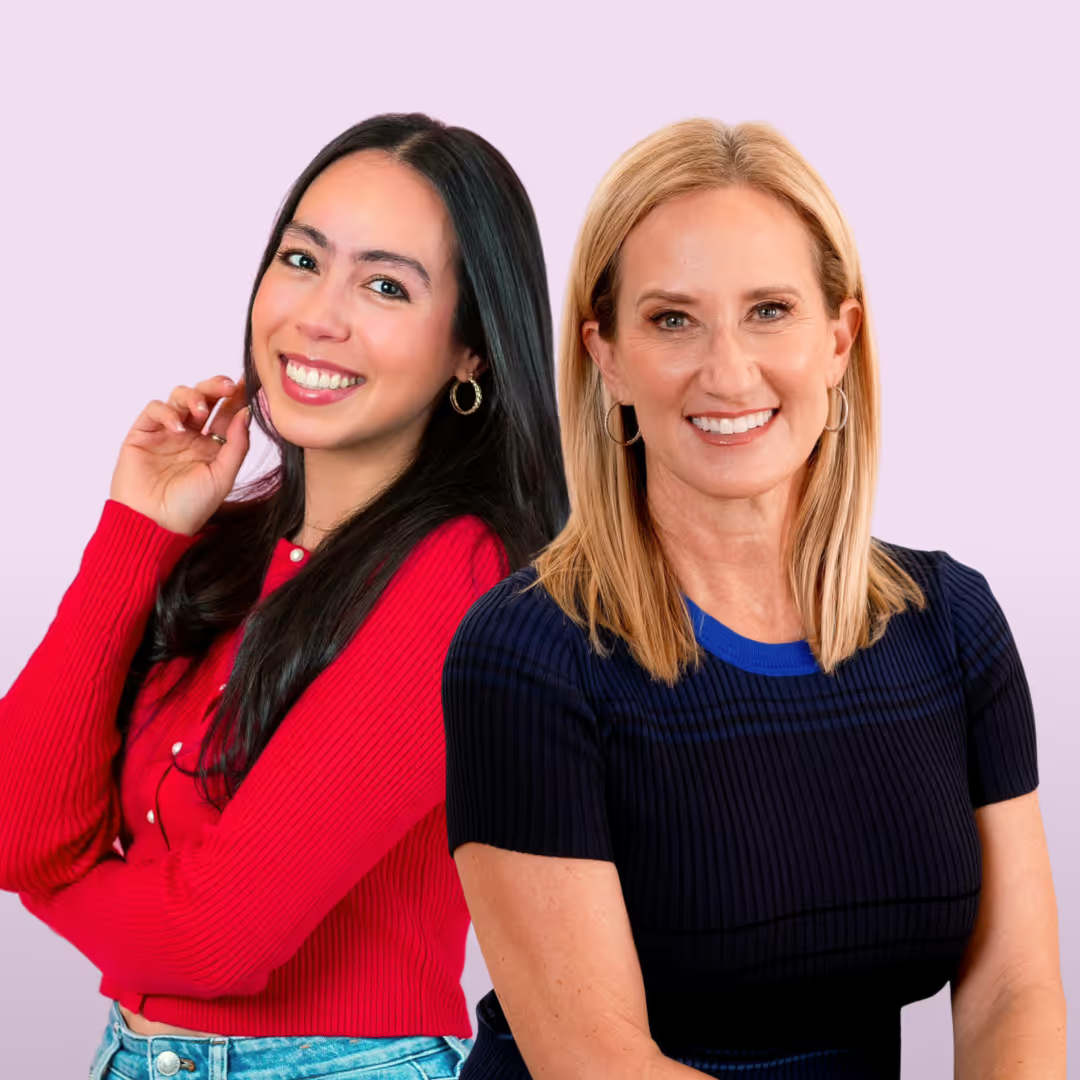
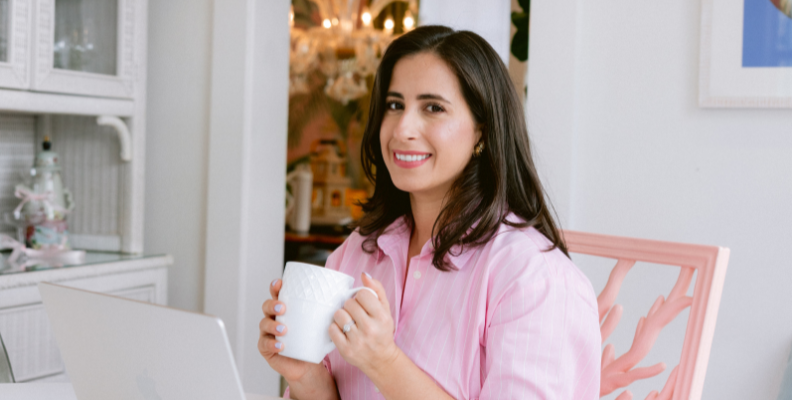
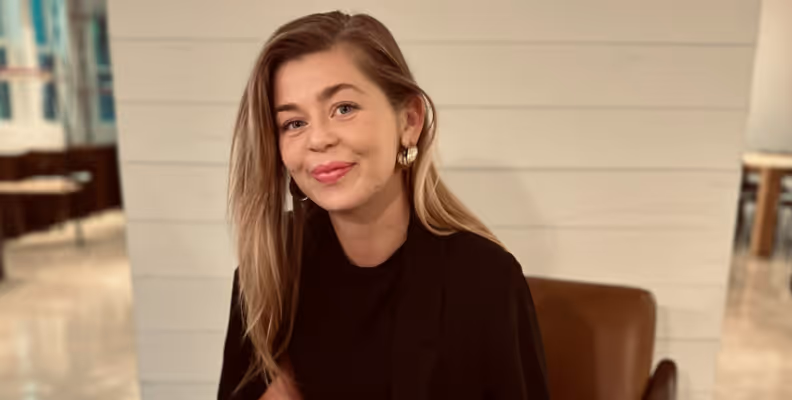
Meet Samantha Ritz, founder of The Elite Woman Project, a coaching system for women founders, business owners, and C-level execs who look successful on paper but feel out of sync in their body and their routines. Sam is a Doctor of Physical Therapy who left the traditional clinical model after realizing she could help women get out of pain but not stay there, and that the gap between rehab and real-life consistency was the problem actually worth solving.
What makes Sam's approach distinct is her belief that high-achieving women already know how to build, they just need a system that lets them apply that same structure to their health. She takes the guesswork out of labs, fitness, nutrition, and habits and turns it into a plan a busy founder can actually follow, so being successful at work no longer has to come at the cost of how she feels in her body.
Please share a brief introduction and your business:
I'm Dr. Sam Ritz, a Doctor of Physical Therapy turned women's health coach and the founder of The Elite Woman Project.
I work with women founders, business owners, and C-level execs who look successful on paper but feel completely out of sync in their body and their routines. They are busy, they are driven, and they are used to figuring things out on their own, but when it comes to their health, it feels overwhelming, inconsistent, or like one more thing on their already full plate.
What I do is help them simplify everything.
Inside my program, I take the guesswork out of labs, fitness, nutrition, and daily routines and turn it into a system that actually works in real life. We focus on optimizing your lab results, making strength training efficient, making anti-inflammatory nutrition easy, and building habits that fit into a busy schedule, not compete with it. The goal is not to do more, it is to finally do what works and be consistent with it.
At the core of my business is this belief that you should not have to choose between being successful in your career and feeling good in your body. I teach women how to build their health the same way they built their business, with structure, clarity, and a plan they can actually follow, so they can step into a version of themselves that feels calm, confident, and fully in control again.
Take us back to when you launched. What was your marketing strategy?
When I first launched my business, my marketing strategy was honestly very simple, it was entirely word of mouth.
I leaned into the relationships I already had, the patients I had worked with, the communities I was a part of, and just started having conversations. I focused on delivering a really high level of care and experience, knowing that if I did that well, people would talk about it, and they did.
It wasn't some big, perfectly mapped-out launch with funnels and content strategies, it was personal, it was hands-on, and it was built one client at a time. And in a lot of ways, that worked better than anything else could have in the beginning because it built trust quickly.
Did it go as planned? Not exactly, because there wasn't really a rigid plan to begin with. But it worked. It allowed me to get early traction, build confidence in what I was doing, and create a strong foundation of clients who genuinely believed in the work and referred others into it.
Looking back, it reinforced something I still believe now, which is that you don't need a complicated marketing strategy to start, you need results, relationships, and a reputation that speaks for itself.
Did you always know you wanted to be an entrepreneur?
Yes, I always knew I wanted to be an entrepreneur, I just didn't expect the timeline to move as quickly as it did.
I always had the mindset of wanting to build something of my own, to have ownership over my work, my impact, and the way I showed up in my career. I just thought it would be something I stepped into later on, after spending more time in a traditional role.
But once I got into the clinical setting and started seeing the gaps in care, it became really clear to me that I didn't want to wait. I could see exactly how I wanted to do things differently, and I knew that if I stayed where I was, I wouldn't have the space to build it the way I envisioned.
So the desire was always there, the timeline just accelerated because I trusted that pull and decided to go all in on it earlier than I originally planned.
What accomplishments are you the most proud of to date in your business?
The accomplishment I'm most proud of is building a business that allows me to be fully remote and work from anywhere.
That wasn't just a lifestyle decision, it was an identity shift. It meant creating something that didn't rely on me being in one place, one clinic, or tied to a traditional structure. It meant building systems, trust with my clients, and a level of delivery that still feels high-touch and personalized, even without being physically present.
For me, that represents freedom, but also responsibility. It showed me that I could design a business that supports the life I actually want to live, not one I feel stuck in.
More than anything, it reinforced the belief that the way we work is not fixed. If you're willing to think differently and build intentionally, you can create something that gives you both impact and flexibility, and that's something I'm really proud of.
What is one thing you wish you had known when you started your Entreprenista journey?
One thing I wish I had known is that clarity comes from action, not from having the perfect plan before you start.
In the beginning, it's easy to think you need everything mapped out, your niche, your offers, your messaging, your systems. But the reality is, most of that gets refined by actually working with clients, having conversations, and being in it day to day. I would have saved myself a lot of overthinking if I had trusted that earlier.
The other piece is understanding that building a business is just as much an identity shift as it is a strategy. You're not just learning how to market or sell, you're learning how to make decisions, trust yourself, and lead at a higher level. Looking back, I would tell myself to move faster, take more action, and trust that the clarity, confidence, and direction all get built along the way, not before it.
What did you do before starting your own business?
Before starting my own business, I was working as a Doctor of Physical Therapy, primarily treating orthopedic injuries with a focus on tennis and pickleball athletes.
I built my career in a very traditional clinical setting, where I was helping patients recover from pain and injury, but I started to notice a bigger gap. Most of the women I worked with were not just dealing with injuries, they were dealing with burnout, inconsistency, and feeling disconnected from their bodies altogether. They would finish rehab and still not feel confident maintaining their health on their own.
At the same time, I was living a version of that myself. I understood what it meant to be high-achieving, to pour into your career, and to let your own routines fall to the side because you were constantly in go mode.
That is what led me to step outside of the traditional model and start my own concierge physical therapy practice, where I worked one-on-one with clients in their homes and on the court. From there, it naturally evolved into what I do now with The Elite Woman Project, where I combine my clinical background with a systems-based approach to help women not just recover, but completely transform how they approach their health, their routines, and their lifestyle.
What made you take the leap to start your own business?
I hit a point where I realized the traditional model wasn't built to actually solve the problem I cared about.
In the clinic, I could help women get out of pain, but I couldn't help them stay there. They would leave feeling better physically, but still overwhelmed, inconsistent, and unsure of how to take care of themselves long term. It felt like we were putting a temporary fix on a much bigger lifestyle problem.
At the same time, I was living a version of that too. I was ambitious, career-driven, and constantly in go mode, but I could feel how easy it was to let my own health fall to the side. That disconnect made it really clear to me that this wasn't just a patient problem, it was a modern woman problem.
I took the leap because I knew there had to be a better way to support women beyond quick appointments and surface-level solutions. I wanted the space to actually coach, to build systems with my clients, and to help them create a lifestyle that felt sustainable, not something they were constantly trying to get back on track with.
Starting my own business gave me the ability to do that. It allowed me to move from just treating symptoms to actually helping women change the way they live, show up, and take care of themselves for the long term.
What's one app on your phone that you cannot live without?
The one app I cannot live without is Google Calendar.
It runs everything for me. My schedule, my client calls, my workouts, my travel, all of it lives there. But more than just keeping me organized, it helps me stay intentional with my time.
I don't just use it to track what I have to do, I use it to design my days. If something matters, whether it's a client call, a workout, or even personal time, it goes on my calendar. That's how I make sure my priorities actually happen, instead of just living in my head.
As a business owner, it also gives me a clear visual of where my time is going, which helps me make better decisions, protect my energy, and stay out of that constant reactive mode.
Who are your customers?
I work with women founders, business owners, and C-level execs.
What's your top productivity tip?
My top productivity tip is to stop trying to do everything and start identifying your minimal effective dose (MED).
What I teach and practice myself is this: every day, identify the one to two things that actually drive results in your business and your life, and do those first. For me, that usually looks like one sales activity and one marketing activity in my business, and one non-negotiable for my health.
Everything else is secondary. This shifts you out of busy work and into intentional action. It creates consistency without burnout, and it allows you to build momentum even in the busiest seasons.
What's your favorite business tool?
My favorite business tool is custom-built GPTs.
They've completely changed how I operate day to day. I use them to streamline everything from client programming and meal planning to content creation and backend systems. Instead of starting from scratch every time, I've built out specific GPTs that think the way I think and execute the way I need them to.
What I love most is that it allows me to scale without sacrificing quality. I can move faster, stay consistent, and still deliver a high-level, personalized experience to my clients.
At the end of the day, it gives me leverage. It takes what used to require hours of mental energy and turns it into something efficient and repeatable, which allows me to focus on the parts of my business that actually require me.
What's your approach to work-life balance?
I don't really look at it as work-life balance, I look at it as work-life integration.
Balance makes it feel like everything has to be perfectly split, and for high-achieving women, that's just not realistic. There are going to be seasons where work requires more, and seasons where life does, and trying to force equal balance usually just creates more stress.
What I focus on instead is alignment. I build my business and my schedule in a way that supports the life I actually want to live. That means having structure in my days, knowing my non-negotiables, and creating systems that allow me to show up fully in both areas without feeling like I'm constantly sacrificing one for the other.
For me, that looks like setting clear boundaries around my time, prioritizing my health the same way I would a business meeting, and designing my work in a way that gives me flexibility, not just output.
At the end of the day, it's not about separating work and life perfectly, it's about creating a life where the way you work actually supports how you want to live.
How do you avoid burn-out?
I avoid burnout by building my life and my business around sustainability, not intensity.
For a long time, I operated in that high-achiever mindset of pushing, doing more, and trying to keep up with everything. What I realized is that burnout doesn't come from doing hard things, it comes from doing too many things without a system to support you.
Now, I focus on creating a baseline that I can maintain even on my busiest weeks. That means structured routines, clear priorities, and knowing what actually matters versus what just feels urgent. I don't try to operate at 100 percent every day, I aim for a level that I can sustain long term and still have flexibility when life gets busy.
I also pay attention to my energy, not just my time. That shows up in how I train, how I eat, how I structure my workdays, and how I recover. Those things are not extras, they are the foundation that allows me to perform at a high level.
What advice do you have for aspiring Entreprenistas?
My advice is to stop waiting until you feel ready and start building now.
Most women think they need more certifications, more clarity, or more confidence before they begin, but the truth is, those things come from taking action, not from sitting on the sidelines trying to figure it all out.
Start with what you know, who you can help, and the results you can create, and build from there.
The other piece is to simplify everything. You do not need a complicated business model to be successful. You need a clear offer, consistent action, and a willingness to follow through even when it feels uncomfortable.
And finally, understand that this is an identity shift. You are not just learning how to run a business, you are learning how to lead yourself, make decisions, and trust your instincts at a higher level.
If you can stay consistent, keep things simple, and commit to growing into the woman your business requires, you will get there.
Samantha's story is a reminder that women who already know how to build companies do not need more hustle, they need a system that finally lets them apply the same clarity to their health. She is teaching her clients that career success and feeling good in your body are not a tradeoff, they are a design choice. We are so glad to have her in the Entreprenista community and cannot wait to watch The Elite Woman Project continue to grow.
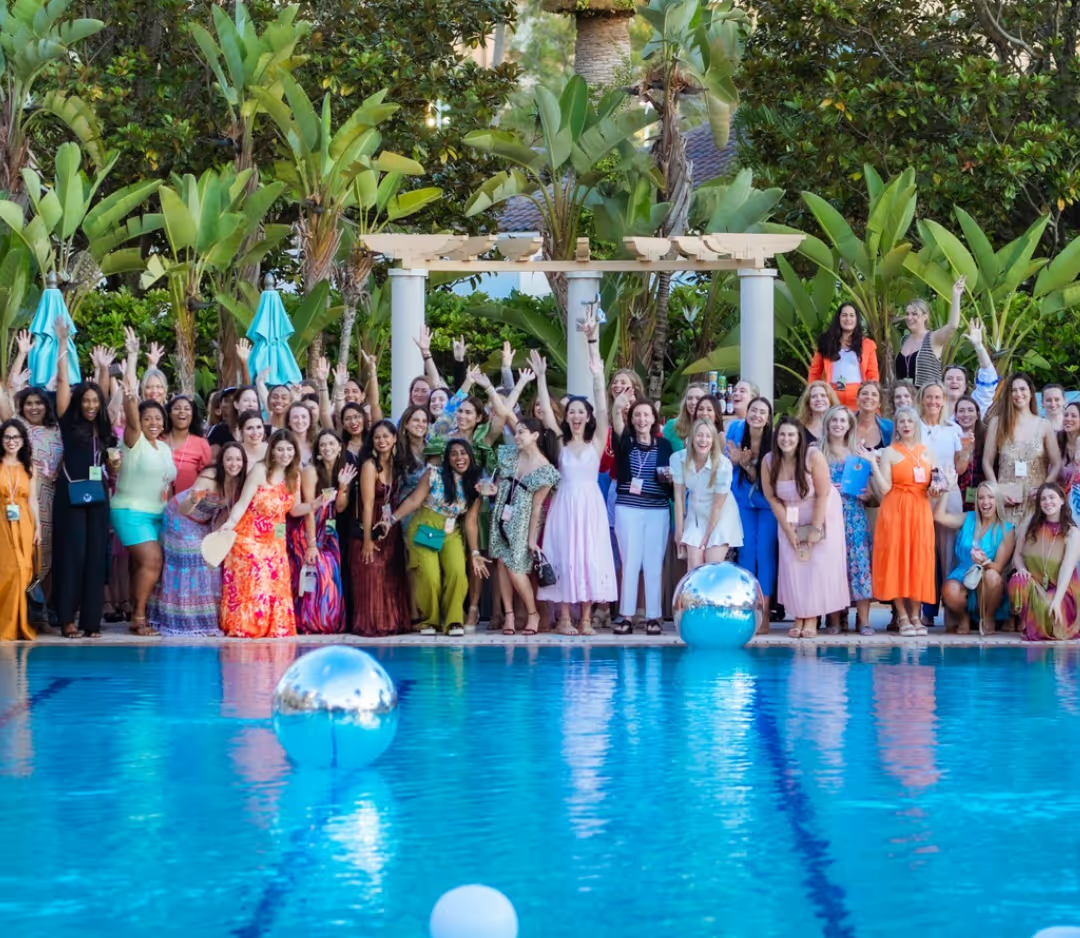
Want to connect with founders like Samantha? Visit the Entreprenista League to explore our community and discover more stories of women building businesses that truly matter.
About the Author
Entreprenista League

The Latest
.avif)
The Burnt English Muffin Principle: Why Sustainable Success Starts Inward
As women leading businesses, we are deeply conditioned to believe our value lies in high gear. We chase the lightning bolts, assuming fulfillment lives only in the extraordinary. Yet sustainable business success begins with the quiet permission we give ourselves to exhale.
