











Why Every Woman Entrepreneur Should Write a Nonfiction Book
How a nonfiction book can position you as the obvious expert and create opportunities beyond book sales.
June 30, 2026
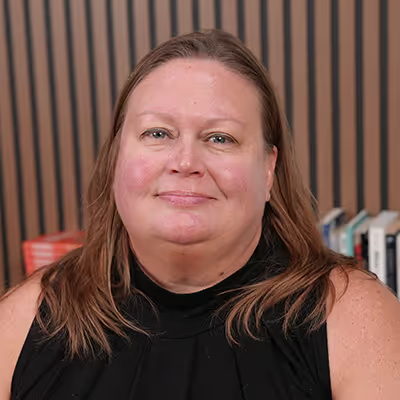
Written by
Stacy Matson
Bucket List Unlimited
For nearly twenty years, I wanted to write a book. Not because I dreamed of becoming an author. I simply believed I had something meaningful to say. The problem was, I didn't know what that message was.
After my father passed away following a battle with Stage 4 colon cancer, everything changed. Watching someone I loved run out of "somedays" made me realize I didn't want to postpone the work I felt called to do. I finally wrote Bucket List Living, believing I was simply publishing a book.
What surprised me wasn't becoming an author. It was becoming an authority.
Networking conversations changed. Podcast invitations increased. Women I had just met began asking if I coached aspiring authors, even though I wasn't offering that service yet. My book didn't magically build my business, but it completely changed how people perceived my expertise.
That experience taught me an important lesson: A nonfiction book isn't your business. It's one of the most powerful positioning tools you'll ever create.
Entrepreneur Russell Brunson teaches that a book isn't the end product; it's the beginning of the customer journey. Instead of measuring success by book royalties, he encourages entrepreneurs to think about the opportunities a book creates: trust, relationships, speaking engagements, coaching clients, and long-term business growth (Brunson, Expert Secrets, 2017).
I couldn't agree more. Today, I encourage entrepreneurs to think differently about writing a book. Instead of asking, "What should I write?", ask yourself, "What problem do I solve?"
Your book shouldn't tell your life story. It should solve one meaningful problem for one specific audience.
When you approach it that way, your book becomes much more than a published manuscript. It becomes a strategic business asset.
Here's the framework I now use when helping entrepreneurs think about their first nonfiction book.
The Author Entrepreneur Method
1. Define Your Purpose
Can you clearly explain the transformation you help people achieve in one sentence?
If not, clarify your message before you write your book.
2. Package Your Expertise
Identify the framework, process, or methodology you already use with clients.
If you can explain it in three to seven repeatable steps, you have the foundation for a book.
3. Position Yourself as the Guide
Your goal isn't to impress readers with everything you know.
Your goal is to help them believe you understand their problem and can guide them toward a solution.
4. Build a Platform
Every chapter should naturally lead readers to another way to continue learning from you, whether that's a podcast, newsletter, workshop, or community.
A book shouldn't be the end of the conversation. It should begin one.
5. Create the Next Step
When readers finish your book, they shouldn't wonder what to do next. They should know exactly how to continue working with you. That's the difference between writing a book and building a business around your expertise.
One of my favorite entrepreneurial lessons is that our audience often sees opportunities before we do. The women who asked whether I coached authors didn't just validate my book. They revealed the next chapter of my business. Sometimes the questions people repeatedly ask you are pointing you toward the business you're meant to build.
If you've been thinking about writing a nonfiction book, don't focus on becoming an author. Focus on becoming the obvious choice. A book won't make you an expert. But it may be the fastest way to help the right people recognize the expertise you've already earned.
Before you invest in another marketing strategy, ask yourself these three questions:
- What problem do I solve better than most people?
- What story proves I can solve it?
- Could that story become the book that positions me as the obvious choice?
If you can answer those questions, you may already have the foundation for your first nonfiction book, and one of the most valuable marketing assets your business will ever create.
Reference
Brunson, R. (2017). Expert Secrets. Hay House Business.
About the Author
Stacy Matson
Bucket List Unlimited
Stacy Matson is an author, entrepreneur, speaker, podcast host, and the founder of Bucket List Unlimited, a personal growth and entrepreneurial community dedicated to helping women create lives they are genuinely excited to wake up to. She is the author of the book Bucket List Living: Living Your Purpose, which inspires readers to stop postponing their dreams and start living with greater intention, purpose, and courage. After experiencing firsthand how easy it is to become disconnected from what truly matters, Stacy made it her mission to help others break free from living on autopilot and begin creating a life by design, not by default.
Through speaking, coaching, events, retreats, and transformational experiences, she empowers women entrepreneurs to align their businesses with their values, expand their vision, and pursue meaningful success. Stacy is also the host of The Author Entrepreneur Collective, where she interviews authors, entrepreneurs, and thought leaders about mindset, purpose, business growth, and personal transformation. Based in Scottsdale, Stacy is passionate about adventure, personal growth, community, and helping people stop waiting for “someday” and start living the life they were meant to live.

The Latest
Heather Lillico Helps Burnt-Out Founders Rewire Their Nervous Systems
The former nutritionist burnt out building her nutrition business, and the tools that brought her back to calm now anchor her coaching for women founders.

Elizabeth Watson Helps Founders Recover Their Lost Energy

Automate Your Site with a 1-Month Free Trial
Kartra