

















Unmuted: My Journey as an Introverted CEO and Founder
February 19, 2026
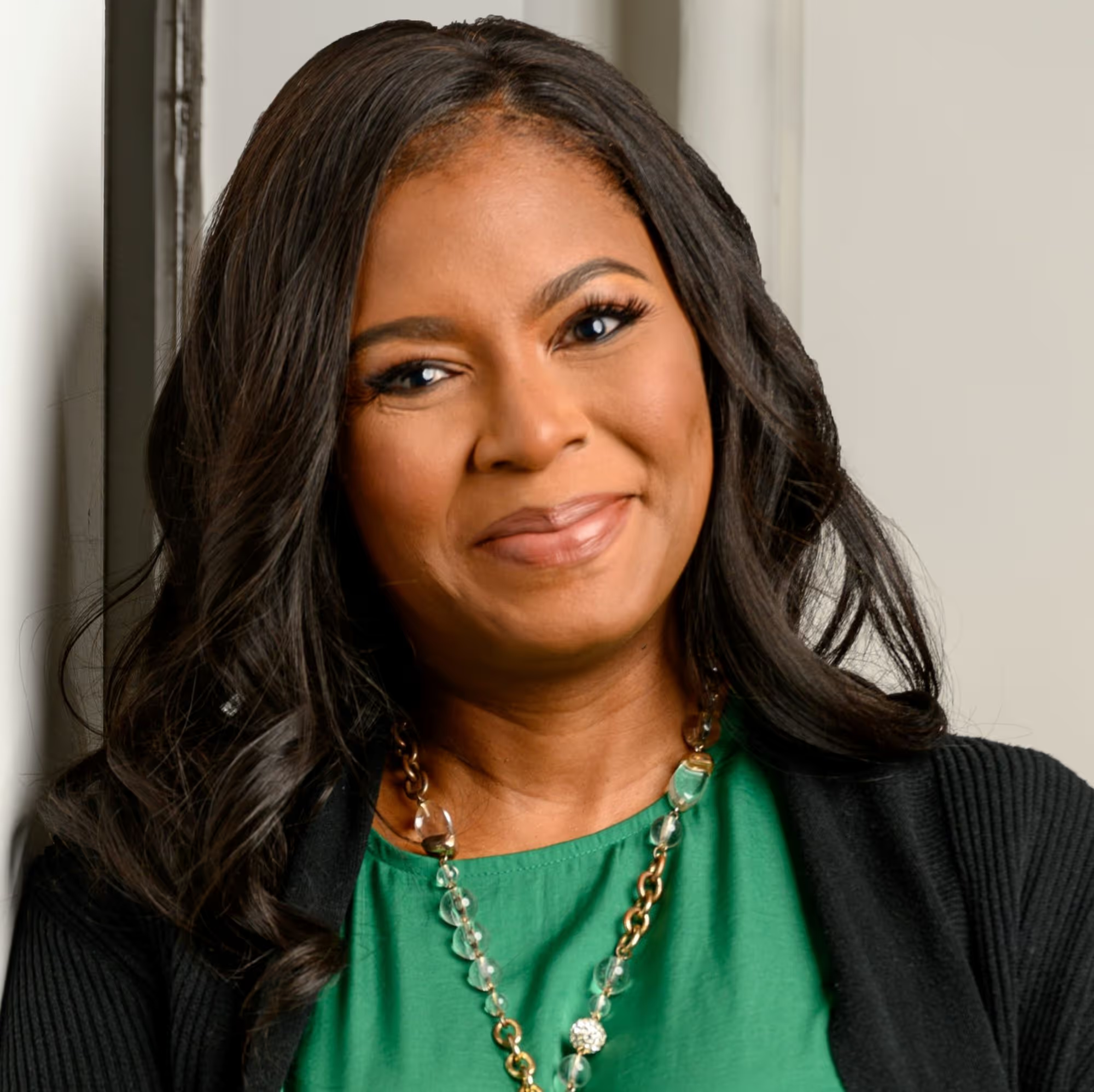
Written by
Tamara Morrison
Premier HR Consulting
Growing up, I admired people who could easily command a room and make the most noise. I remember sitting in classrooms, and later, conference rooms, watching others speak up effortlessly while I processed quietly, waiting until I was certain my contribution truly mattered.
The comments I would hear early in my childhood were familiar and persistent:
Why are you so quiet?
My daughter used to be shy, but she got over it.
Why can’t you be more outgoing?
Early on in my life, I realized there was a stark difference between introverts and extroverts, and that the world often rewarded the loudest voices.
While introverts make up nearly half of the population, only about 6% of top executives at global companies identify as introverts (Susan Cain, TED Talk, 1/2/25). Despite this, a persistent bias remains: that introverts lack confidence, leadership ability, or the capacity to run successful companies. This could not be further from the truth.
According to the Cleveland Health Clinic (What Is an Introvert? Common Traits and Misconceptions, 2/5/25), introverts are energized by internal rather than external sources. They thrive in quiet, low-stimulation environments and value reflection and intentional decision-making. Extroverts, by contrast, draw energy from social interaction and external stimulation. Many founders fall somewhere in between adapting their style or partnering with others to meet the demands of leadership.
As an introverted CEO and founder, I’ve spent the past nine years navigating expectations that often favor extroversion: open offices, constant collaboration, large-scale networking, podcasting, and non-stop social media presence.
I still remember my first large networking event as a founder, and walking in already exhausted by the thought of small talk. Instead of forcing myself to “work the room,” I focused on a few meaningful conversations. Those connections later became long-term clients and partners, reinforced
What I’ve Learned as an Introvert in an Extroverted World
Sales
Listening is my superpower. By deeply researching clients and focusing on their needs, I build trust and close more deals by hearing more than I speak. I prioritize relationship-building to create genuine connections with C-suite leaders and business owners, not surface-level conversations. Thoughtful, persuasive written follow-up often does what small talk cannot: it closes the deal.
Decision-Making
I prioritize facts and data over feelings and optics. By carefully analyzing information and truly understanding my clients, I provide recommendations that are thoughtful, strategic, and tailored to their specific needs.
Networking
Preparation and placement matter. Intentional conversations, whether in person, virtual, or in small groups, create stronger, more authentic connections than massive forums that are overwhelming, less meaningful, and far less productive.
Calm Under Pressure
I remain steady in high-stress situations, breaking complex challenges down methodically to find solutions. When a client calls with a difficult employee issue, my instinct is to lean in, fully understand the situation, and work through practical, effective solutions.
Leading Teams
Effective leadership requires emotional intelligence, empathy, and empowerment. I strive to create environments where people feel supported and truly seen. Strong teams are built through ongoing feedback and opportunities for growth. When employees feel they are building collaboratively with their founder, they are far more invested in delivering positive outcomes.
Partnerships
Strategic partners with complementary strengths have amplified my voice and helped scale my business in ways I could not have achieved alone. Surrounding yourself with people from diverse backgrounds, who challenge and support you, makes you a stronger leader. These partnerships reinforce both internal and external structures as your organization grows.
Values-Driven Visibility
I don’t seek the spotlight for its own sake. I choose opportunities that align with my values and purpose, allowing me to remain authentic. I say yes only to speaking engagements where the topic and message align with my brand and will genuinely resonate with the audience.
Closing Thoughts
Leadership doesn’t require being the loudest voice in the room. Some of the most influential women including Brené Brown, Sara Blakely, Shonda Rhimes, Susan Cain, Rosa Parks, Oprah Winfrey, and Mother Teresa have led with quiet strength.
There is more than one way to lead, succeed, and make an impact.
Even quietly.
Even as an introvert.
Always unmuted.
About the Author
Tamara Morrison
Premier HR Consulting
After 20 years of creating value for Fortune 500 companies, non-profits, and major growth brands as a leading HR executive, Tamara was motivated to tap into her family’s entrepreneurial spirit and start her own consulting company to better support growing organizations that were in dire need of human resources services but lacked the knowledge of where to start. She founded Premier HR Consulting in 2017 to help more ambitious decision-makers and successful entrepreneurs gain access to professional-level human resources strategies and internal tools that could position them for successful growth without sacrificing their own time and resources.
Tamara graduated from NYU with her Master’s in Human Resources and Development with a minor in Organizational Effectiveness. She holds a Bachelor of Arts in Economics with a minor in Management from Spelman College. Tamara is a current board member of Habitat for Humanity-LI, Girls Inc. Long Island, and New Bedford Home for the Aged in New Bedford, MA.

The Latest

Heather Lillico Helps Burnt-Out Founders Rewire Their Nervous Systems
The former nutritionist burnt out building her nutrition business, and the tools that brought her back to calm now anchor her coaching for women founders.

Elizabeth Watson Helps Founders Recover Their Lost Energy

Automate Your Site with a 1-Month Free Trial
Kartra