



.avif)









Nakia Hanson of Jus Us University on Trauma Recovery Coaching for High Achievers
March 9, 2026

Written by
Nakia Hanson of Jus Us University on Trauma Recovery Coaching and Restoring Alignment for High Achievers
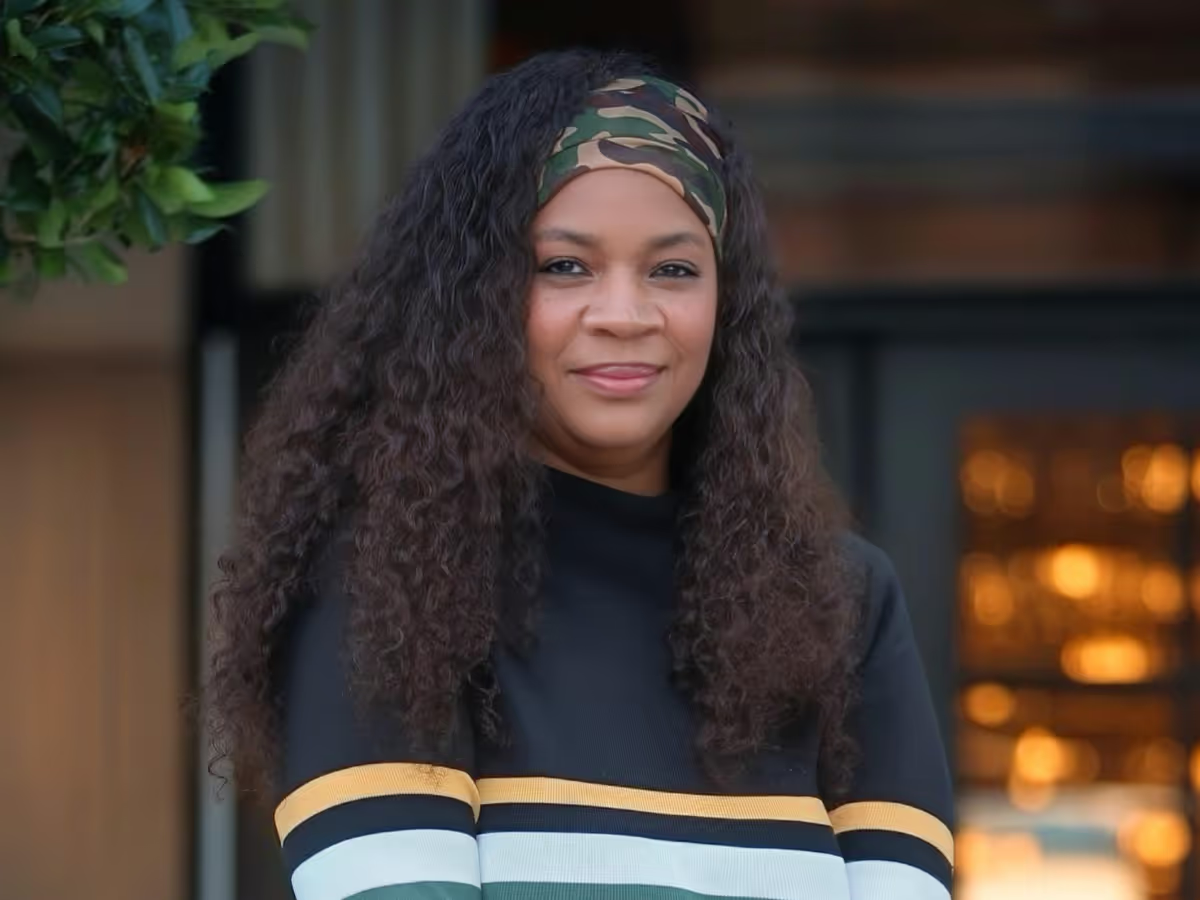
Nakia Hanson is the CEO of Jus Us University and a Private Fuel Up & Thrive Restoration Reset Practitioner who works with high achieving professionals navigating chronic stress, survival mode, and depletion. Her work focuses on helping leaders restore alignment across their physical, mental, and spiritual health so success no longer comes at the expense of well being.
Originally launched as Jus Us Trauma Recovery Coaching and Training, Nakia’s work grew through referrals, trusted relationships, and decades of experience supporting survivors of domestic violence, sexual assault, and complex relational trauma. Today, her private practice serves leaders and entrepreneurs seeking restoration, clarity, and sustainable success.
Please share a brief introduction and your business:
When I first launched my business, my marketing strategy was intentionally relational. My work began as Jus Us Trauma Recovery Coaching and Training, and growth came primarily through word of mouth, referrals, and trusted relationships built over years of service.
At that time, I was working closely with survivors of domestic violence, sexual assault, and narcissistic abuse both privately and through my role supporting students and families within a university setting. Platforms like Psychology Today helped with visibility, but the foundation of the business was trust, results, and reputation. That part of the strategy worked exactly as planned.
What didn’t go as planned was the evolution of my calling.
Several years later, I experienced what I can only describe as a personal “parking” from God through a cancer diagnosis. While my body healed, my nervous system and my identity were not yet ready for the new direction that was being revealed to me. For nearly five years, I stayed in what was familiar and comfortable, even though I knew there was more.
In 2026, I chose obedience over comfort.
Today, my work has evolved into a private practice serving high-achieving men and women who appear successful on the outside but are quietly paying the cost of a life lived in survival mode physically, mentally, and spiritually. This business is the result of lived experience, professional depth, and a clear calling to help people stop normalizing depletion as the price of success.
Are you a mamaprenista?
Yes, I am a Mamaprenista and my biggest piece of advice is to stop trying to do everything at the same time. Integration works better than balance. There are seasons where business needs more from you and seasons where family does, and allowing that shift without guilt is key.
I also believe children don’t need a perfect parent; they need a present one. I focus on quality of presence over quantity of hours, and I’m honest about capacity. That means protecting my health, modeling boundaries, and letting my family see what aligned leadership looks like, not constant over-functioning.
Finally, I’ve learned that sustainable success starts at home. When your nervous system is regulated and your priorities are clear, both your business and your family benefit.
Take us back to when you launched? What was your marketing strategy?
When I first launched my business, my marketing strategy was intentionally relational. My work began as Jus Us Trauma Recovery Coaching and Training, and growth came primarily through word of mouth, referrals, and trusted relationships built over years of service.
At that time, I was working closely with survivors of domestic violence, sexual assault, and narcissistic abuse both privately and through my role supporting students and families within a university setting. Platforms like Psychology Today helped with visibility, but the foundation of the business was trust, results, and reputation. That part of the strategy worked exactly as planned.
Did you always know you wanted to be an entrepreneur?
I don’t know that I always used the word entrepreneur, but I always knew I wasn’t meant to operate inside narrow boxes. I’ve always been someone who sees possibilities, creates solutions, and finds ways to make things work,even when the path isn’t obvious. I was scared to take a leap of faith to start something on my own. Now, I am glad that I trusted God and did not allow my fear to take over.
Early on, I followed service-oriented and leadership roles where those instincts were useful, but I eventually realized that the level of autonomy, creativity, and impact I was wired for required building something of my own. Entrepreneurship gave me language to what I had already been doing for years creating and leading.
So in that sense, I didn’t become an entrepreneur overnight. I grew into one by recognizing how I was already designed to operate in this world.
What accomplishments are you the most proud of to date in your business?
The accomplishment I’m most proud of is the transformation I’ve witnessed in my clients,seeing them move from survival into thriving, reclaiming their health, clarity, and purpose. Watching people come back to themselves and build lives that actually sustain them is deeply fulfilling.
I’m also proud of becoming an author and giving language to experiences so many people struggle to articulate. That work extended my impact beyond private rooms and into the hands of those who needed it.
But personally, the greatest accomplishment has been how I now show up. I no longer chase opportunities or people. I’ve learned to chase alignment instead. I lead with obedience to God’s direction, and that shift has brought peace, clarity, and confidence. From that place, success no longer feels forced,it’s just flowing. And I can honestly say, it’s not coming someday. It’s already here.
What is one thing you wish you had known when you started your Entreprenista journey?
I’m at the very beginning of my Entreprenista journey, so rather than looking back, I’m coming in with clarity. What I’m already aware of is this: community works best when you’re intentional about how you engage. The value isn’t in consuming everything, it's in forming meaningful relationships with the right people.
I’m approaching this space with discernment, openness, and a willingness to both learn and contribute. I’m excited to connect with women who are building with integrity and depth, and to grow within a community.
When hiring, what is your go-to interview question?
“When you’re under pressure, what do you do to stay grounded and what happens when you’re not?”
That question tells me how self-aware someone is and how they navigate stress, accountability, and responsibility. I’m listening for honesty, emotional regulation, and the ability to reflect not perfection.
A few additional hiring principles guide me as well. I look beyond resumes and focus on how someone shows up because skills can be taught, but integrity and stability cannot. I also hire slowly and intentionally. Waiting for the right fit protects the work, the culture, and everyone involved far more than rushing to fill a role.
What did you do before starting your own business?
Before starting this business, my background was rooted in trauma-informed care, crisis support, and leadership within systems serving individuals and families in high-stress situations. I spent decades working directly with survivors of domestic violence, sexual assault, narcissistic abuse, and complex relational trauma, as well as supporting students and families in a university setting where I held both support and management roles.
Much of that work focused on stabilization, recovery, and helping people rebuild their lives after a crisis. Over time, I began to recognize a pattern not just among survivors, but among high-functioning professionals and leaders who were outwardly successful yet internally living in chronic survival mode.
That professional foundation, combined with my own lived experience, ultimately shaped the work I do now: helping high-achieving individuals restore alignment before prolonged survival takes a deeper toll on their health, relationships, and lives.
What made you take the leap to start your own business?
I’ve always known that I wasn’t built for a traditional 9–to–5 environment. I’m wired to create, to lead, and to problem-solve beyond rigid systems. I don’t accept “no” as a final answer,I see it as an invitation to find another path, another solution, or a better way forward.
Over time, I realized that the qualities that make me effective,initiative, persistence, discernment, and the willingness to challenge limitations weren’t fully valued in conventional roles. Entrepreneurship gave me the freedom to build something aligned with how I’m designed to work and serve.
Starting my business wasn’t about rejecting structure; it was about creating the right structure, one that allowed impact, autonomy, and purpose to coexist. That leap gave me the space to do my best work, fully aligned with both my calling and my capacity.
Do you have any recent wins?
Becoming an author was a significant milestone for me because the book was specifically written for survivors of relationship and sexual violence, a population I had served for over 27 years. Writing it felt like completing a chapter with intention and integrity, giving voice to experiences that deserved to be acknowledged and honored.
Releasing the book allowed me to formally close that season of my work. It created space for me to step out of that niche with peace, knowing I had poured my knowledge, care, and advocacy into something lasting. In many ways, it served as both a contribution and a transition.
That clarity made it possible for me to move fully into my new calling, working privately with high-achieving individuals who are living in survival mode and need restoration before the cost shows up in irreversible ways.
What's one app on your phone that you cannot live without?
Honestly, I don’t have a single app I can’t live without. Part of my self-care and sustainability practice is being intentional about my relationship with my phone. I regularly take social media breaks, and I intentionally put my phone away on Sundays to create space for rest, presence, and reflection.
That boundary helps me stay grounded and prevents technology from dictating my attention or pace. When I’m not constantly connected, I’m clearer, more regulated, and more effective in both my work and my personal life.
Who are your customers?
My clients are high-achieving men and women who look successful on the outside but are quietly carrying the cost of prolonged pressure and survival on their body, mind, and spirit.
They’re leaders, entrepreneurs, professionals, and legacy-minded parents who have mastered performance but lost access to rest, presence, and sustainability. Many of them aren’t burned out; they're highly functional while being deeply depleted. What they’re looking for isn’t more motivation or strategy, but a private space to restore alignment and health before the cost shows up in more serious ways.
I work with people who are self-aware enough to recognize that success should not require self-abandonment, and who are ready to invest in restoration, not just coping and pushing through.
What's your top productivity tip?
My top productivity principle is regulation before execution. If your nervous system is dysregulated, no system, planner, or hack will work for long. I protect my capacity first to sleep, boundaries, and margin because clarity comes from a regulated state, not from pushing harder. I also celebrate my small or big wins each month.
Second, I prioritize discernment over volume. I don’t measure productivity by how much I accomplish in a day, but by whether I’m doing the right things at the right time. Sometimes the most productive thing I do is stop, delay, or say no. NO is a complete sentence.
Finally, I build in intentional pauses. Stillness creates clarity. I create moments of stillness everyday. When I give myself space to listen rather than constantly respond I work faster, make better decisions, and waste far less energy.
What's your favorite business tool?
Practically speaking, I keep my systems simple and supportive rather than complex and overwhelming. I choose tools that reduce noise, protect my time, and allow me to work deeply rather than constantly react. Simplicity has been one of the most effective solutions for building a sustainable business.
At this stage, the most valuable solution for me is anything that supports clarity, capacity, and long-term integrity, not just speed or scale.
What's your approach to work-life balance?
I don’t approach it as work-life balance,I think in terms of integration and sustainability. My life isn’t divided into competing compartments; it’s one ecosystem that requires care and intention.
I build my work around capacity, season, and alignment rather than forcing separation. There are seasons where work requires more focus, and seasons where rest, family, or health takes priority and I allow for that without guilt. What matters is that nothing is consistently neglected.
I protect non-negotiables rest, recovery, and presence
because they directly affect the quality of my leadership and work. When work and life are integrated with intention, neither has to be sacrificed for the other.
How do you avoid burn-out?
I avoid burnout by refusing to live in urgency. Burnout doesn’t usually come from workload alone, it comes from prolonged pressure without regulation or support. I pay attention to my body before things escalate, and I adjust early rather than pushing through warning signs.
I’m intentional about peace, boundaries, and recovery. I don’t wait until I’m depleted to rest, and I don’t confuse constant availability with effectiveness. I also check alignment regularly when something begins to feel heavy or forced, I pause and reassess instead of powering through.
Most importantly, I’ve learned that sustainability is a discipline. Protecting my health, clarity, and peace isn’t a reward for success, it's the foundation that makes success possible.
What advice do you have for aspiring Entreprenistas?
Since I’m new to this space, my advice comes from how I’m choosing to enter it. Be intentional, not reactive. You don’t need to consume everything or prove yourself immediately. Focus on building genuine relationships, listening well, and allowing yourself to grow into the room instead of trying to perform for it.
Show up with integrity, stay aligned with your values, and trust your pace. Communities are most powerful when you engage with curiosity and contribution rather than comparison. Growth happens when you give yourself permission to learn while remaining grounded in who you are.
Nakia Hanson has built a practice rooted in trauma informed care, lived experience, and deep relational trust. Through Jus Us University, she now helps high achieving leaders move beyond survival mode and create lives aligned with health, clarity, and purpose.
If you are a woman founder looking to grow your business while connecting with a powerful network of female entrepreneurs, Entreprenista provides the community and resources to help you scale with confidence. Learn more about joining Entreprenista League.
About the Author
Entreprenista League

