

















The 3 Ten-Second Moves That Turn 'Maybe' Into 'Yes' on a Sales Call
May 21, 2026
Written by
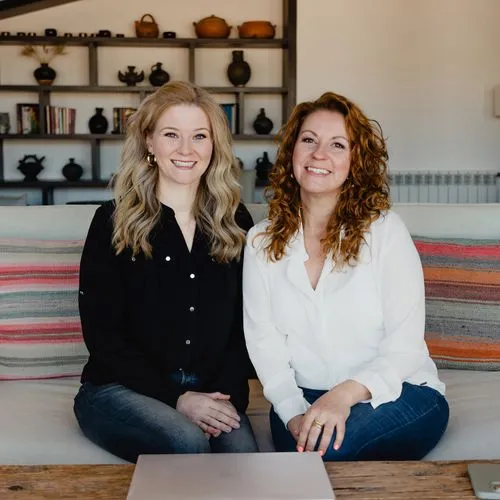
Lauren Shaw & Lauren Capwell
The Lauren’s
If your sales calls have felt harder lately… more "I need to think about it," more ghosting, more perfect-fit prospects choosing someone else, it's probably not your offer. It's probably not your marketing. And it's definitely not that you're bad at sales.
It's that the margin for error on your sales calls just got a lot thinner and gaps you could get away with a year ago are now costing you real money.
We’re going to break down exactly why this is happening and then we'll give you 3 specific things you can do on your very next sales call to start turning more of those "maybes" into yeses. (One of them helped a client close her last three calls that would have otherwise ghosted. It takes 10 seconds.)
But first, let us explain what's actually going on because once you see the pattern, everything clicks.
WHAT WE HEARD AT FOUNDERS WEEKEND
We were at Entreprenista’s Founders Weekend recently, and we spent a lot of time asking women a simple question: "How are your sales calls going?"
The answers had a pattern. Almost everyone said some version of:
• "I'm still getting calls booked, but they're not closing like they used to. Even when the prospect seems like a perfect fit."
• "I'm hearing 'I need to think about it' way more than I used to."
• "I lost a couple to competitors recently, people who checked around and chose someone else."
• "My referrals have slowed down, so the people on my calendar are coming in colder than before."
• "I struggle to articulate the value of what I do when I'm actually on the call, live, under pressure."
If any of that sounds familiar… keep reading, because what's really going on is not what most people think.
THE REAL PATTERN BEHIND ALL OF THIS
Here's what connects every single one of those problems:
For years, your referral network did a lot of the heavy lifting on your sales calls for you.
Think about it. When a warm referral books a call with you, they show up already trusting you. The person who referred them already did the convincing. You didn't have to establish credibility, handle skepticism, or guide them through a real decision… you just had to not mess it up.
And that felt amazing. It felt like you were naturally great at sales because the calls were easy, the close rates were high, and everything flowed.
But here's the thing nobody talks about:
When your pipeline is mostly warm referrals, you're not really doing a full sales conversation. You're facilitating a transaction that was already 80% closed before you got on the phone.
That's not a criticism, it's just a structural reality.
Now that buyers are more cautious, referrals have slowed, and the people on your calendar are arriving colder and more guarded, you're being asked to do the full sales conversation for the first time in a while.
Build the trust. Lead the discovery. Articulate the value clearly. Transition from conversation to offer without it feeling awkward. Handle real concerns. Close with confidence.
And if you haven't had to flex those specific muscles in years, they've quietly atrophied because your referral engine was so good that you never needed them.
This is why your calls feel different. Because the conditions changed, and the skills that used to be optional are now the ones that determine whether or not someone says yes.
WHERE IT USUALLY SHOWS UP
When we work with established women founders on their sales calls, the same pattern shows up almost every time:
The first half of the call is great. You build rapport beautifully. You ask excellent discovery questions. The prospect is engaged, leaning in, feeling heard.
Then somewhere around the offer, when it's time to articulate the value, say the price, and invite them to a decision, something subtle shifts.
• You slip into "coach mode" and start giving away the transformation on the call itself.
• You over-explain your offer instead of painting a clear outcome.
• You ask "What questions do you have?" instead of "Are you ready to begin?"
• You let them leave to "think about it" without any structured next step.
• You don't follow up, because following up feels like chasing, and chasing feels beneath you.
None of this means you're bad at sales. It means there are small, specific gaps in the back half of the call. And in a market where buyers are more cautious, those gaps are now the difference between a yes and a ghost.
"The sales call is your prospect's first experience of working with you, not a hurdle you have to get over. When the call itself is clear, grounded, and confident, the close is a natural conclusion."
3 SMALL SHIFTS THAT MAKE A BIG DIFFERENCE
We want to give you something you can actually use right now. These are 3 tiny adjustments that our clients tell us are game-changers and they take almost no time to implement.
✦ PRO TIP #1: When They Say "I Need to Think About It"
Don't just say "of course, take your time!" and hang up. Instead, try this:
"Usually when I hear that, it's one of two things… either it's truly logistical, like figuring out how to make it happen, OR you're still uncertain whether this will actually work for you. Just so I'm clear, which one feels more true?"
This one question completely changes the conversation. It gives them permission to tell you what's actually going on and now you can address the real concern right there on the call, instead of losing them to a follow-up email they never respond to.
✦ PRO TIP #2: Always Schedule the Follow-Up Before You Hang Up
If the call ends in a "maybe," do not just say "OK, let me know!" and end the call.
Schedule a follow-up call while you're still on the phone with them.
One of our clients recently told us: her last 3 "maybe" calls where she did schedule the follow-up? All 3 closed. Her next 2 "maybe" calls where she didn't schedule a follow-up? Both ghosted.
That's not a coincidence. This one small move can make a massive difference in your close rate and it takes 10 seconds.
✦ PRO TIP #3: When They Say Yes, Lock It In Immediately
When your prospect says "Yes, I'm in!" take payment on the call if you can. That's always the best move.
If you can't take payment right then, schedule an onboarding call before you hang up so there's a next step on the books. This is huge for preventing the dreaded post-call ghost, where someone says yes on Tuesday and you never hear from them again.
A "yes" without a next step is not a yes yet. Make the commitment real before you end the call.
———
These are the kinds of small, specific adjustments that sound almost too simple until you see what happens to your close rate when you actually do them.
And that's exactly what we help our clients with. When we review their actual sales calls together, we find the tiny moments… the ones they can't see from inside the conversation, where a small shift in language, timing, or energy turns a "maybe" into a "yes."
THE BIGGER PICTURE
Here's what we want you to take away from this:
It’s not necessarily a lead gen problem. You don't need a new offer. You don't need to blow up your business model.
What will actually move the needle the fastest is to close the gap between your expertise and your conversion so that the calls you're already getting turn into the revenue they should be producing.
For most established women founders, that gap lives in a very specific place: the back half of the sales call. The offer articulation. The price. The close. The follow-up. And because it's a skill gap (not a "you" gap), it's fixable. Quickly.
Same lead flow. Same offer. Same you. Much better results.
WANT TO FIND THE GAPS ON YOUR CALLS?
We work with established women founders to pinpoint exactly where their sales calls are falling short and make the specific adjustments that turn more conversations into clients. If what you read here resonated, we’d love to talk.
→ Book a Call with Us ←
About the Author
Lauren Shaw & Lauren Capwell
The Lauren’s
Hi, we’re the Laurens! Lauren Capwell is a former aerospace engineer with Stanford AI training who builds incredibly intuitive, high-converting AI tools (like our AI Gems that literally clear subconscious marketing and sales blocks, review your sales calls to create the perfect follow up and write high-converting copy!).
Lauren Shaw brings the energetic sales mastery having taken over 2,000 sales calls and closed for multiple 8-figure business owners. We work with brilliant, high-integrity female coaches and consultants who are amazing at what they do, but struggle during the most important parts of their sales calls. We are the bridge between deep energetic healing and high-converting tech (Soul + System!). We combine energetic mastery with powerful AI tools to help women shed their subconscious sales blocks, build their bespoke sales scripts, and confidently enroll high-ticket clients without ever feeling pushy or exhausted.

The Latest

Heather Lillico Helps Burnt-Out Founders Rewire Their Nervous Systems
The former nutritionist burnt out building her nutrition business, and the tools that brought her back to calm now anchor her coaching for women founders.
Elizabeth Watson Helps Founders Recover Their Lost Energy

Automate Your Site with a 1-Month Free Trial
Kartra