
















Alex Steric Is Changing the Conversation on Maternal Mental Health
November 13, 2026

Written by
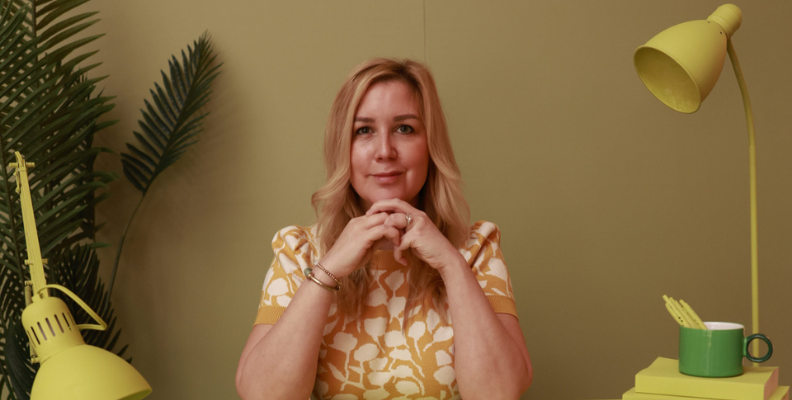
Years of clinical training did not prepare Alex Steric for what motherhood would ask of her. As a licensed therapist, she still found herself facing postpartum anxiety, intrusive thoughts, and an identity shift she had no words for. If it caught her off guard, she realized, it was catching countless other women off guard too. This became the foundation of her practice.
Alex Steric is a licensed clinical social worker, a perinatal mental health specialist, and the founder of Alex Steric LCSW, Inc., a California-based therapy practice supporting women through the messy, beautiful, and often unspoken parts of motherhood. Her solo practice has grown into a group practice, an online community of more than 35,000 followers, and a mentorship hub for therapists. A member of the Entreprenista League, Alex is ready to take these conversations further.
“You can be grateful for what you have and still want more,” Alex says.
What she built next says as much about permission as it does about therapy.
Training and lived experience in the same room
Alex earned her Master of Social Work from USC in 2012 and became a licensed clinical social worker in 2015, building expertise in maternal mental health, anxiety, and trauma. Motherhood changed how she understood all of it. She learned firsthand how isolating it can feel and how hard it is to admit you are struggling when everyone expects you to be happy.
That experience shaped both how she practices and the kind of business she wanted to build. “I wanted to create something that felt real, approachable, and deeply human,” she says.
The conversations women are afraid to have
Alex works with women who love their children deeply and still feel like they have lost themselves. They are experiencing anxiety, resentment, intrusive thoughts, burnout, or guilt, and many are convinced they are the only ones. “Sometimes the first step toward getting help is simply hearing someone say, ‘Me too. I’ve felt that way,’” she says.
She brings more than a decade of clinical experience to that work, along with her own humanity. Her sessions use evidence-based approaches while staying warm and approachable, so women can show up exactly as they are. Other clinicians in the Entreprenista League are answering the same need, including Amanda Timonere, who supports women through the identity shift of motherhood.
Many of her clients arrive believing they need to become more patient or more grateful. The work often leads somewhere kinder: support, boundaries, space for their own needs, and permission to let go of impossible expectations.
More than 35,000 women who thought they were alone
The first signs that this was working came from her online community. When Alex shares something about the parts of motherhood people rarely discuss, hundreds of women respond with their own stories and some version of “I thought I was the only one who felt this way.” Others message her to say her content gave them words for what they were feeling or nudged them to reach out for support.
That community is now more than 35,000 women. “They’re connecting with my voice, my perspective, and the conversations I’m willing to have,” she says.
From solo practice to group practice
Eventually, Alex could no longer serve every client herself. She expanded into a group practice, brought other therapists onto her team, and launched mentorship and consultation communities for therapists. She has also started taking on more speaking, educational workshops, and brand collaborations.
Nobody taught her how to market herself, hire employees, manage finances, or build a brand, so she learned through trial and error. Now she wants the therapists on her team to feel supported as whole people with full lives outside of work. “I’m not interested in building a practice where burnout is treated like a badge of honor,” she says.
Ambitious, with limits
Her biggest challenge has been growing a business without losing herself. Alex sees clients 3 days a week so she has room for her family and for being a person outside of work. Building a team, asking for help, and setting boundaries have been some of her biggest areas of growth.
“I’m learning that I can be ambitious and still have limits,” she says. “I can want more without constantly feeling like what I’ve already built isn’t enough.”
Taking the conversation to bigger stages
Next, Alex plans to grow her group practice to support more women and families through pregnancy, postpartum, and motherhood, and to keep creating mentorship and consultation for therapists. She wants to bring these conversations to bigger platforms through speaking, workshops, media, brand partnerships, and, she hopes, a book someday.
She encourages aspiring founders to “sometimes do the scary thing, figure it out as you go, and let the confidence catch up,” she says. “You are allowed to be ambitious. You’re allowed to want more.”
You can learn more about Alex’s therapy practice and her business coaching for therapists at alexstericlcsw.com and connect with her on LinkedIn.
Alex is building her practice alongside a community of women founders doing the same. No one should ever have to build a business alone. Consider this your official invitation to join us.
About the Author
Entreprenista League

The Latest

Kim Meninger Is Making It Easier to Be Human at Work

Samantha Moonsammy Helps Entrepreneurs Turn Their Stories Into Books That Build Brands

Automate Your Site with a 1-Month Free Trial
Kartra