







.avif)
How Hilda Emeruwa Built Total Home Physical Therapy in a Bag to Give Seniors Their Independence Back
April 27, 2026

Written by
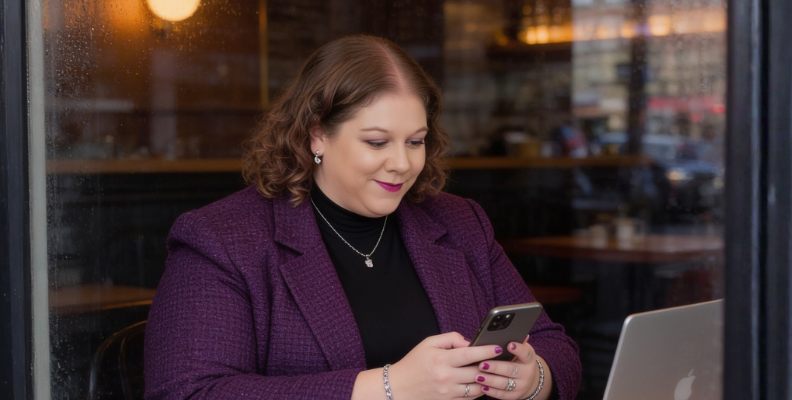
Meet Hilda Emeruwa, founder of Total Home Physical Therapy in a Bag, a home-based therapy company whose VersaBall, a 3-in-1 device, helps seniors and individuals with limited mobility maintain strength, balance, and independence at home. Before launching the company, Hilda built her career in operations, compliance, and administrative leadership at the World Bank, including serving as head of the regional leadership team for the Africa Region. She retired from that role to care for her mother, and it was that caregiving experience that exposed the gap between clinical therapy sessions and what families could actually sustain at home.
Hilda did not set out to start a company. She set out to solve a problem for her mother, and when her mother passed, she turned what they had built together into a mission, with her children as co-founders. That willingness to take something deeply personal and make it useful to thousands of other families is exactly what defines how she builds.
Please share a brief introduction and your business:
At Total Home Physical Therapy in a Bag, we are passionate about giving the gift of independence to seniors and individuals with limited mobility, while providing peace of mind to their families and caregivers.
Our journey began with a personal story: inspired by caring for my mother, we created the VersaBall, a 3-in-1 therapeutic device designed to help older adults and individuals with temporary or prolonged mobility limitations perform guided strength, balance, and mobility activities more safely and consistently, and improve their quality of life. What started as one simple idea has grown into an innovative solution helping thousands of seniors and individuals in recovery.
Do you have a co-founder?
Yes, I have two co-founders, my children, who worked alongside me from the very beginning. What started as a personal project became a shared mission, and their involvement grew naturally as we developed the idea together.
Finding the right co-founders, in our case, was rooted in trust, shared values, and a deep understanding of our “why.” We are aligned in our commitment to making a meaningful impact, and that foundation has been essential.
Are you a mamaprenista?
Yes, I am a Mamaprenista. Although my children are now adults, my journey as a mother, especially as a caregiver, has deeply shaped how I lead and build my business.
My advice is to embrace the different seasons of life. There is no perfect balance, but there is purpose in every stage. The skills you develop as a mother, adaptability, problem-solving, and perseverance, are incredibly valuable in building and sustaining a business.
Take us back to when you launched? What was your marketing strategy?
As we prepare to launch, our marketing strategy has been focused on building awareness, trust, and early demand rather than traditional advertising. Because our product introduces a new approach to home-based physical therapy, we knew education would be key.
We began by engaging directly with our target audiences: caregivers, seniors, and healthcare professionals. We've been conducting in-person and virtual demonstrations, and developing clear messaging to communicate both the problem and our solution in a simple, relatable way to generate initial traction, gather feedback, and refine our approach ahead of full commercialization.
Did you always know you wanted to be an entrepreneur?
No, I didn't always know I wanted to be an entrepreneur. My journey began with a very specific goal: to create a single, integrated, multifunctional tool that could make it easier for my mother to maintain her strength and mobility at home.
What started as a personal solution quickly revealed a much bigger need. After my mother passed, I reflected on everything we had built and the challenges we had faced. That's when I made the decision to turn our project into a business, not just to honor her, but to ensure that others facing similar situations would have access to a simple, practical solution.
Entrepreneurship became the path to bring that vision to life at scale. It transformed something deeply personal into a mission-driven company focused on helping others maintain their independence and quality of life. We cannot wait to bring it to market.
What accomplishments are you the most proud of to date in your business?
One of the accomplishments I am most proud of is turning a deeply personal experience into a mission-driven business that has the potential to improve the lives of many. What began as a solution for my own family has grown into a structured company with a clear vision, defined product line, and a path toward market launch.
I am also proud of the resilience it has taken to move from concept to a near market-ready product, navigating design, prototyping, and production while building partnerships and refining our strategy along the way. Each milestone has required persistence, adaptability, and a strong belief in the value of what we are creating.
Another meaningful accomplishment is that my entrepreneurial journey will be featured in a book (expected 2027). I see this as an opportunity to share the lessons I've learned, especially the challenges and mistakes, so that others can navigate their own paths with greater clarity and confidence.
For me, success is not only about building a product, but also about creating impact, sharing knowledge, and helping others move forward more effectively.
What is one thing you wish you had known when you started your Entreprenista journey?
One thing I wish I had known when I started my Entreprenista journey is how many valuable resources are available at the county and state level to support entrepreneurs.
Early on, I didn't fully realize the extent of support, from mentorship and training to funding opportunities and strategic connections. Discovering these resources later made a significant difference in how I approached building my business.
If I had known sooner, I would have engaged with these ecosystems earlier to accelerate my progress, avoid certain challenges, and make more informed decisions. It's something I now actively encourage other founders to explore from the very beginning.
When hiring, what is your go-to interview question?
While I have not formally begun hiring yet, I've been intentional about thinking through the kind of team and culture I want to build.
One question I plan to ask is: “Can you share an example of how you approached a problem when there wasn't a clear solution?” As a startup, adaptability, resourcefulness, and initiative are essential, so I value candidates who are comfortable navigating uncertainty.
What did you do before starting your own business?
Prior to starting my business, I built my career in operations, compliance, and administrative leadership at the World Bank. I held roles focused on quality control, operational effectiveness, and team leadership, and volunteered to lead the Administrative and Client Support (ACS) Staff for the Africa Region. In that capacity, I also served as Head of the regional leadership team, providing administrative leadership to staff both in our Washington, DC office and country offices.
I developed a strong foundation in problem-solving, strategic coordination, and leadership, skills that became essential when I transitioned into entrepreneurship.
Beyond my professional background, my most defining experience was as a caregiver. Supporting my mother through recovery exposed me to the real challenges individuals face in maintaining strength and independence at home. That experience ultimately inspired me to start my company and develop solutions that make physical therapy more accessible, practical, and empowering for everyday use.
What made you take the leap to start your own business?
My journey into entrepreneurship was deeply personal. I retired from my job to care for my mother. That was when I witnessed firsthand how difficult it can be for seniors and individuals with limited mobility to maintain their strength and independence once they return home. Even with the best intentions, continuing physical therapy outside of clinical settings was often confusing, inconsistent, and overwhelming for both the individual and their family.
I realized there was a clear gap between what happens in therapy sessions and what people are able to sustain at home. I didn't set out to start a business. I set out to solve a problem I had experienced personally. That experience became the foundation for creating a simple, accessible solution that empowers individuals to continue their recovery safely and confidently at home, while giving peace of mind to their caregivers.
Taking the leap was about turning that moment of frustration into purpose. I wanted to build something that not only works, but truly makes a difference in people's daily lives.
Do you have any recent wins?
One of my recent wins has been the opportunity to speak to a group of entrepreneurial students on the topic of industry and competition. It was a meaningful experience to share real-world insights from my journey and contribute to the next generation of entrepreneurs.
In addition, I was honored to place third in a pitch competition, which provided both validation of our business and funding to support our progress. I have also continued to build strategic relationships through accelerator programs and mentorship networks, strengthening the foundation for our upcoming launch.
Each of these milestones reflects not only progress in the business, but also growing visibility and impact within the entrepreneurial community.
What's one app on your phone that you cannot live without?
Two apps I rely on daily are Microsoft Outlook and LinkedIn.
Outlook Calendar keeps me organized and intentional with my time, helping me manage meetings, deadlines, and priorities efficiently. LinkedIn, on the other hand, is essential for building relationships, sharing my journey, and staying connected to the entrepreneurial and professional community.
Together, they help me stay both structured and visible.
Who are your customers?
Our customers include adult children of seniors who are seeking safe, practical ways to support their loved ones at home, as well as caregivers who want simple and reliable tools to assist with daily mobility and strength-building.
We also serve individuals with temporary or long-term mobility limitations who need accessible, easy-to-use solutions to continue their recovery independently. In addition, physical therapists and rehabilitation professionals represent a key target market, as our products are designed to help extend care beyond clinical settings and support patient progress between sessions.
What's your top productivity tip?
My top productivity tip is to stay focused on purpose, not just activity. I've learned to ask myself, “Does this move the business forward?” If the answer is no, I rethink how I'm spending my time. Clarity of purpose helps me stay disciplined and avoid unnecessary distractions.
That's also why I'm joining the Entreprenista's Book Club centered on The 12 Week Year, to continue strengthening my ability to execute with focus and intention.
What's your favorite business tool?
One of my favorite business tools is Microsoft Outlook, along with the broader Microsoft Office ecosystem. These tools help me stay organized, manage communication efficiently, and keep everything from emails to documents and scheduling in one place.
I also rely on Zoom for demos, meetings, and connecting with partners. It has been especially valuable for sharing our vision and engaging with stakeholders in a clear and accessible way.
As a founder, I value tools that are simple, reliable, and support execution without adding unnecessary complexity.
What's your approach to work-life balance?
My approach to work-life balance is really about intentional integration rather than perfect separation. As a founder, there are seasons that require intense focus, but I've learned the importance of building structure around that.
I've found that balance isn't about doing everything at once. It's about being fully present in what I'm doing, whether that's building the business or taking time to restore my energy. That approach helps me stay grounded, focused, and sustainable over the long term.
How do you avoid burn-out?
I avoid burnout by being intentional about rest and creating clear boundaries for myself. I take Saturday afternoons and Sundays off, which gives me dedicated time to reset and recharge.
I also enjoy cooking my own meals. It's a great way for me to disconnect from work, be present in the moment, and do something creative. That balance helps me come back with more focus, energy, and clarity.
What advice do you have for aspiring Entreprenistas?
My advice for aspiring Entreprenistas is to listen more than you speak. There is so much to learn from others: mentors, peers, and even potential customers, and those insights can save you time, money, and unnecessary mistakes.
I also encourage founders to explore free resources first. There are incredible programs, mentorship opportunities, and support systems available, especially at the local and state level, that can help you build a strong foundation without immediately taking on financial risk.
Starting a business is a learning journey. Stay open, stay curious, and take advantage of the support around you.
Hilda's story is a reminder that the most meaningful companies often begin as answers to problems the founder had to live through first, and that grief, turned toward purpose, can build something that helps thousands of other families. We are so excited to have her in the Entreprenista community and cannot wait to watch Total Home Physical Therapy in a Bag continue to grow.
Want to connect with founders like Hilda? Visit Entreprenista League to explore our community and discover more stories of women building businesses that truly matter.
About the Author
Entreprenista League

The Latest
Vivrelle: How the Luxury Accessory Club Started With “I Do”
Who started Vivrelle? Meet co-founder Blake Geffen who turned her wedding-day idea into a premier luxury membership club for designer bags and jewelry.
Lara Bruner Teaches Women The Science Of Influence

Automate Your Site with a 1-Month Free Trial
Kartra